
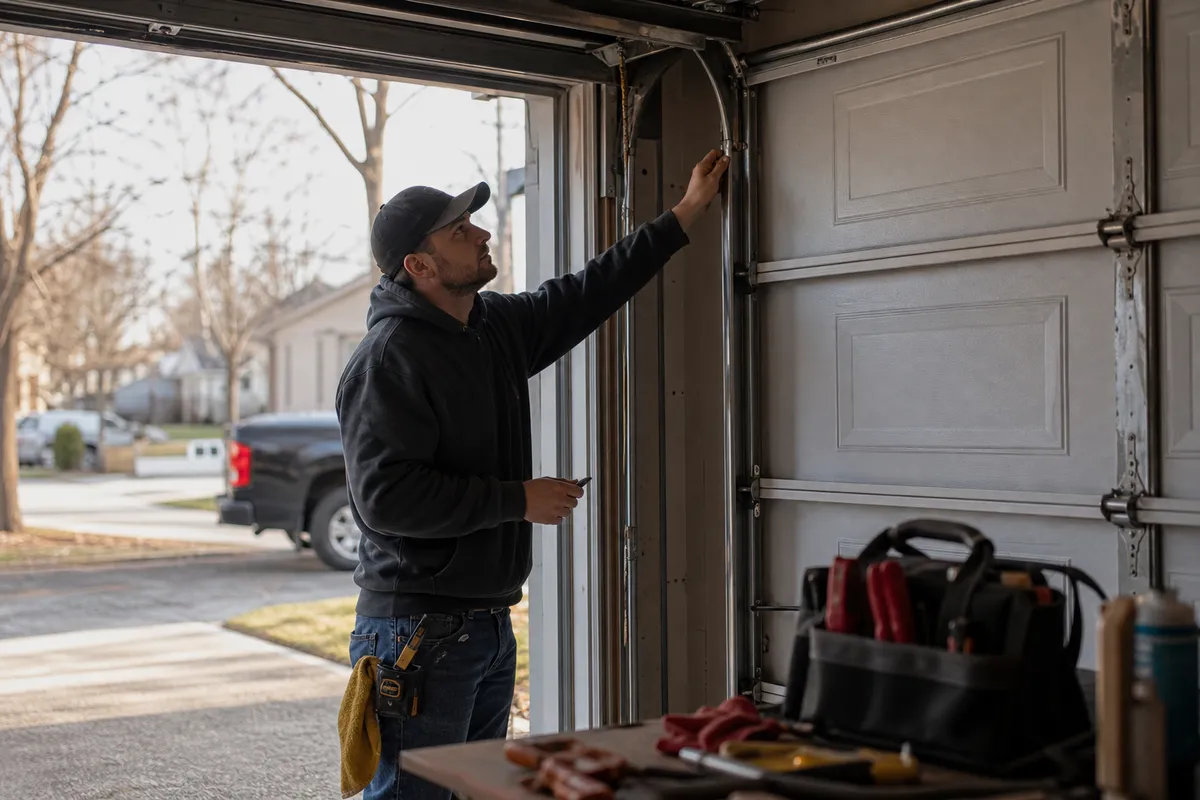
Annual Garage Door Safety Inspection Checklist for Nashville
Your garage door is the largest moving part of your home, and for most families from East Nashville to Spring Hill, it opens and closes several times a day, every single day. Yet it is also one of the most neglected systems in the house — most homeowners don't give it a second thought until something breaks, jams, or becomes a genuine safety hazard. That's exactly why we put together this annual garage door safety inspection checklist. Whether you own a historic bungalow near Germantown, a townhome in The Gulch, or a brand-new build in Nolensville, walking through these steps once a year keeps your door safe, quiet, and dependable.
Middle Tennessee weather is especially hard on garage doors. Humid summers, freeze-thaw snaps in winter, spring pollen that coats sensor lenses, and the severe storms that roll through areas like Antioch and Mt. Juliet all take a toll on springs, cables, and openers. A little preventive attention goes a long way toward avoiding an unexpected breakdown — or an accident.
Why an Annual Garage Door Safety Inspection Matters in Middle Tennessee
A garage door under spring tension weighs a great deal, and when a component fails, it can fail fast. Springs snap, cables fray, and doors that once glided smoothly start slamming shut or getting stuck halfway. An annual garage door safety inspection checklist gives you a simple, repeatable way to catch small problems — a loose hinge, a dull roller, a misaligned sensor — before they turn into dangerous or expensive ones.
It also matters for the people and pets around your door. Modern openers are required by federal safety standards to include auto-reverse mechanisms, a rule that has been in place since the early 1990s, but those safety features only work if they're tested and maintained. If anything in the checklist below looks or sounds wrong, don't force it — schedule same-day garage door repair in Nashville and let a trained technician take a look.
The Annual Garage Door Safety Inspection Checklist
Set aside an hour on a weekend, grab a flashlight, a socket wrench, a small level, and a lubricant designed for garage doors, and work through the following steps in order. If you're ever unsure at any point, stop and call a professional.
1. Start With a Visual Inspection (Door Closed)
With the door fully closed, look over the springs, cables, rollers, pulleys, and mounting hardware. You're checking for visible wear: rust (common in our humid climate), frayed cable strands, cracked rollers, loose bolts, and dented panels. Pay close attention to anything that looks out of place compared to the last time you looked.
2. Test the Door's Balance
Disconnect the opener by pulling the manual release handle, then lift the door by hand to about waist height and let go. A properly balanced door should hold its position. If it slams down or shoots upward, your springs are worn or out of adjustment. Spring work is not a DIY job — the tension in a torsion spring can cause serious injury — so this is the point in the checklist where you should call for professional garage door spring replacement rather than attempting a fix yourself.
3. Test the Auto-Reverse Feature
Open the door fully, lay a scrap of two-by-four flat on the ground where the door meets the floor, and close the door using the opener or wall button. The door should make contact with the wood and immediately reverse. If it keeps pushing or stalls, the force settings or the opener itself need professional attention.
4. Check the Photo Eye Sensors
Those two small sensors near the floor on either side of the door are your family's most important safety feature. Wave a broom handle through the beam while the door is closing — it should reverse instantly. Then wipe the lenses with a soft, dry cloth. In spring, pollen across Davidson and Williamson County can coat these lenses and cause false stops, so a quick cleaning solves a surprising number of "mystery" door problems. If the sensor lights are flickering or the LEDs won't align, gently adjust the brackets until the lights glow steadily.
5. Inspect Rollers, Hinges, and Tracks
Run your eyes along both vertical and horizontal tracks, checking for bends, gaps, and debris. Look at each roller for chips or cracks, and check hinges for wear around the screw holes. Snug up any loose hardware on hinges and brackets with a socket wrench — vibration from daily use works screws loose over time, especially on doors that see heavy traffic in busy households from Sylvan Park to Hendersonville.
6. Lubricate the Moving Parts
Apply a silicone-based or white lithium garage door lubricant to the rollers, hinges, stems, and the bearings at the ends of the torsion spring. A light coat is all you need — over-lubricating attracts dust and grit. Skip the tracks themselves; they should be clean and dry, not greasy. If your door still squeaks after lubrication, that's often a sign of a worn roller or hinge that needs replacing.
7. Look Over the Cables and Springs — From a Distance
Visually confirm that lift cables are seated in their drums and show no fraying or kinks. Never touch or work near the springs themselves. If you see a visible gap in a torsion spring, dangling cable, or signs of rust corrosion, keep everyone clear of the doorway and call a technician right away.
8. Test the Opener, Keypad, and Battery Backup
Test every remote, the wall button, and your exterior keypad. If your opener has a battery backup, disconnect power briefly and run the door — that backup battery is what keeps your door working during the outages that follow Middle Tennessee's ice storms and severe summer thunderstorms. If remotes or keypads have stopped responding, reprogramming usually solves it, and help is available for garage door keypad and remote programming in Nashville.
9. Check the Weatherstripping and Bottom Seal
Run your hand along the bottom seal and side weatherstripping. Cracked, brittle, or missing rubber lets in rain, humidity, pests, and hot air — a real problem for garages in Green Hills or Brentwood that sit below living space. Replacement bottom seals are inexpensive, and keeping them intact also helps your door close flush against an uneven driveway.
10. Practice the Manual Release
Finally, make sure everyone in the household old enough to drive knows how to pull the red manual release cord and operate the door by hand during a power outage. Practice it once with the door closed. It takes two minutes and removes a lot of panic the next time a storm knocks out electricity in Donelson or Franklin.
Monthly Quick Checks vs. the Annual Deep Dive
The full annual garage door safety inspection checklist takes about an hour, but a few 60-second habits each month keep you covered in between:
| Task | Frequency | What to Look For |
|---|---|---|
| Watch and listen to a full open/close cycle | Monthly | Jerky movement, grinding, scraping, or popping sounds |
| Test the photo eye sensors | Monthly | Door reverses when the beam is broken; steady sensor lights |
| Glance at springs and cables | Monthly | Rust, fraying, gaps, or anything visibly out of place |
| Clear the tracks and doorway | Monthly | Leaves, grit, stored items blocking the door's path |
| Full checklist above | Annually | Balance, auto-reverse, hardware, lubrication, weatherstripping |
Warning Signs Nashville Homeowners Should Never Ignore
- A loud bang from the garage — often the sound of a torsion spring breaking under tension.
- A door that suddenly feels heavy when lifted by hand — the springs are no longer doing their share of the work.
- The opener hums but the door doesn't move — possibly a stripped gear or a broken spring.
- Visible fraying or a dangling cable — the door is one cycle away from jamming or falling.
- The door reverses for no reason or won't close at night — frequently a sensor alignment or lens issue, sometimes worsened by direct sunlight in west-facing driveways.
DIY or Call a Pro? Knowing Your Limits
Everything on this checklist that involves looking, listening, lubricating, and testing is safe for homeowners. Anything that involves springs, cables, or bottom brackets under tension is not. Those components store enough energy to cause severe injury, and adjusting them requires the right tools and training. If you'd rather not think about it at all, our garage door maintenance program puts the annual inspection on a professional's calendar so it never slips through the cracks.
Frequently Asked Questions About Garage Door Safety Inspections
How often should I run through this garage door safety inspection checklist?
Once a year at minimum, ideally in the fall before winter temperature swings stress the springs and opener. Households that run the door many times a day — busy families in Murfreesboro or Smyrna, for example — benefit from the monthly quick checks listed above as well.
What's the most common problem you see on service calls in the Nashville area?
Worn springs and frayed cables top the list, followed by misaligned photo eye sensors and opener issues. Our humid climate and big seasonal temperature swings accelerate wear on springs, so doors here tend to need spring service sooner than the national averages many manufacturers quote.
Is an annual inspection really necessary if my door seems fine?
Yes. Springs and cables wear gradually and often show no symptoms until the moment they fail. A yearly checklist catches that hidden wear, tests the safety features that protect kids and pets, and typically costs far less than an emergency repair — or replacing a car that got trapped under a jammed door.
How long does a professional garage door inspection take?
Most visits are wrapped up in well under an hour, including a balance test, safety sensor check, hardware tightening, and lubrication. If the technician finds a worn part, you'll get a clear recommendation on the spot — many repairs can be completed the same day.
Which areas does Dominion Door Systems serve?
We serve homeowners and businesses throughout Nashville and Middle Tennessee, including Downtown, The Gulch, East Nashville, Germantown, 12 South, Sylvan Park, Green Hills, Belle Meade, Antioch, Donelson, Madison, Bellevue, Franklin, Brentwood, Nolensville, Murfreesboro, Smyrna, La Vergne, Hendersonville, Mt. Juliet, Columbia, Spring Hill, and the surrounding communities.
Schedule Your Garage Door Safety Inspection in Nashville and Middle Tennessee
Working through an annual garage door safety inspection checklist is one of the smartest habits a Middle Tennessee homeowner can build — and if any step turns up a problem, you don't have to handle it alone. Dominion Door Systems provides fast, expert garage door repair and inspection across Nashville, Franklin, Brentwood, Murfreesboro, Columbia, Mt. Juliet, and everywhere in between, with same-day service available. Contact us today to schedule your safety inspection and keep your door running safely all year long.